Does Your Ocala Business Website Need an E-Commerce Store?
Selling online sounds straightforward until you actually look into what it takes.
Some businesses add an online store and watch revenue climb. Others build one, spend months managing it, and realize it was the wrong move for where they are right now.
The difference isn’t the technology. It’s whether the business was actually ready for e-commerce and whether the store was built the right way for their specific situation.
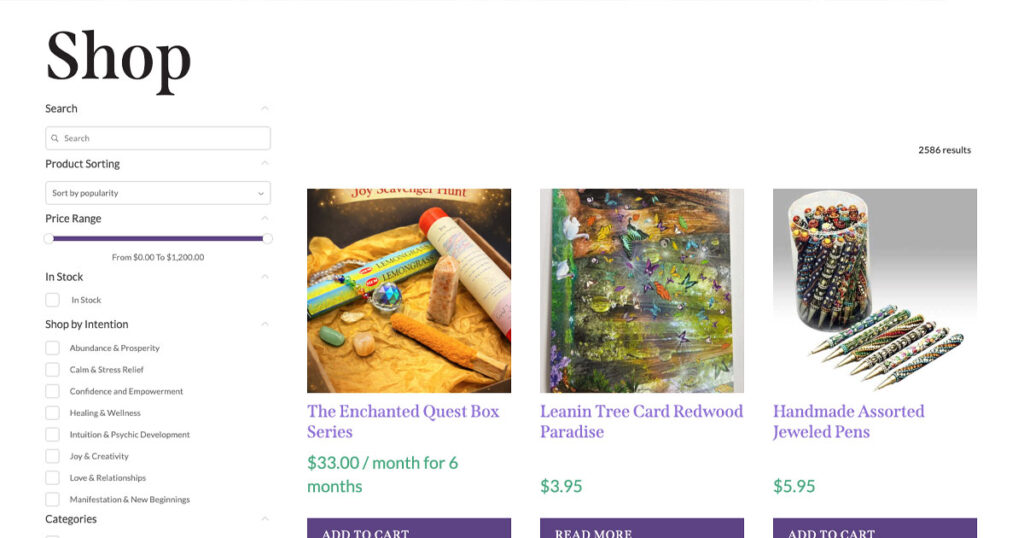
This post gives you a clear framework for deciding whether an e-commerce website makes sense for your Ocala business right now, what a real store setup involves, and what to think about before you commit.
Not Every Business Needs a Full E-Commerce Store
This is worth saying upfront because a lot of business owners assume they need one when they don’t.
If your primary revenue comes from services delivered in person, over the phone, or through a quote-based process, an online store probably isn’t what’s holding you back. Adding one won’t replace the need for better local SEO, a stronger website, or a clearer call to action. It’s a separate business function that requires ongoing management, not a quick fix for a lead generation problem.
E-commerce makes sense for specific types of businesses and specific growth goals. The questions below will help you figure out if yours is one of them.
Signs Your Business Is Ready for E-Commerce
You’re already selling products and doing it manually.
If you’re taking orders through DMs, over the phone, or through a separate invoicing process, that’s a sign your customers want to buy from you and you’re creating friction by not having a streamlined way to let them. An online store removes that friction.
You have a product that ships or can be delivered.
Physical products, digital downloads, branded merchandise, and consumables all translate naturally to e-commerce. If your product can get from you to a customer without requiring a custom scope of work or in-person interaction, it’s e-commerce compatible.
You have consistent demand and enough inventory to support it.
An online store that’s frequently out of stock or that can’t keep up with orders creates a worse customer experience than not having one at all. Before launching, make sure your supply side can support the demand side.
You’re looking to reach customers outside of Ocala.
A brick-and-mortar business or local service provider is geographically limited. An e-commerce store removes that ceiling. If you have a product that could sell regionally or nationally, an online store is the mechanism that makes that possible.
You have an existing customer base that would buy online.
The easiest e-commerce wins come from converting customers who already trust you. If your existing clients would buy from you online if you made it easy to do so, you already have your first audience.
Signs You’re Not Quite Ready Yet
Your core website isn’t performing.
If your existing site isn’t generating leads, doesn’t rank locally, or has serious usability issues, adding an e-commerce layer on top of a broken foundation makes both problems harder to solve. Fix the foundation first.
You’re thinking of e-commerce as a replacement for a service business model.
Adding a store doesn’t change your business model. If you provide custom services, the store works alongside that, not instead of it. Make sure you’re clear on how the two coexist before building.
You don’t have a clear product and pricing structure.
An online store requires clean, defined product listings with clear pricing. If your offerings are highly custom, variable, or require a consultation before pricing, a quote request form will serve you better than a product catalog.
You don’t have bandwidth to manage it.
A live store requires ongoing inventory management, order fulfillment, customer service, and product updates. If you’re already stretched thin, launching a store without a plan for managing it is a setup for a poor customer experience.
What a Real E-Commerce Setup Involves
This is where a lot of business owners get surprised. A proper e-commerce website is more complex than a standard informational site. Here’s what a well-built store actually requires.
Platform decision.
For most small businesses building on WordPress, WooCommerce is the natural e-commerce layer. It integrates cleanly with an existing WordPress site, gives you full ownership of your store and data, and is highly customizable. For businesses that are purely product-focused at significant scale, Shopify is worth considering as a standalone platform.
Product setup.
Every product needs a clear name, description, pricing, photography, variant options (size, color, etc.), and inventory tracking. For a catalog of any size, this is a meaningful content project on its own.
Payment processing.
Stripe and PayPal are the standard integrations. SSL certification is required for any site processing payments. This is non-negotiable and needs to be verified before the store goes live.
Shipping and fulfillment logic.
If you’re shipping physical products, the store needs accurate shipping rate calculations, zone definitions, and clear policies on handling times, returns, and exchanges. Getting this wrong costs you money and customer trust.
Tax configuration.
Sales tax rules vary by state and product type. Florida has specific exemptions and requirements. This needs to be configured correctly from day one, not figured out after the fact.
Security and maintenance.
A live store is a higher-maintenance asset than a standard website. WooCommerce plugins, payment gateway integrations, and WordPress core all require regular updates. A compromised store doesn’t just hurt your site, it puts customer payment data at risk.
WooCommerce vs. Shopify: The Short Version
For most Ocala businesses already on WordPress, WooCommerce is the right call. It keeps everything on one platform you already own, integrates with your existing SEO setup, and gives you full control without a separate monthly platform fee.
Shopify is worth considering if you’re building a store-first business with a large product catalog, significant transaction volume, and dedicated e-commerce operations. It’s purpose-built for that use case and handles some of the complexity around payments and fulfillment more elegantly at scale.
If you’re already on WordPress and want to add a store, our e-commerce solutions and custom WordPress development services handle the full build, from platform setup and product migration to payment integration and ongoing support. And our website maintenance service covers the ongoing updates and security monitoring that a live store requires.
The Question That Matters Most
Before you budget for an e-commerce build, answer this honestly:
Do I have a product my existing or potential customers would buy online, and can I fulfill orders consistently at a margin that makes the investment worthwhile?
If the answer is yes with confidence, e-commerce is the right next step. If you’re unsure, the right first step is a conversation to pressure-test the model before you build.
That’s exactly what our free strategy call is for. We’ll look at your current situation, your product or service model, and your goals and give you a straight answer on whether e-commerce makes sense for where your business is right now.
Or reach out directly and we’ll set something up.