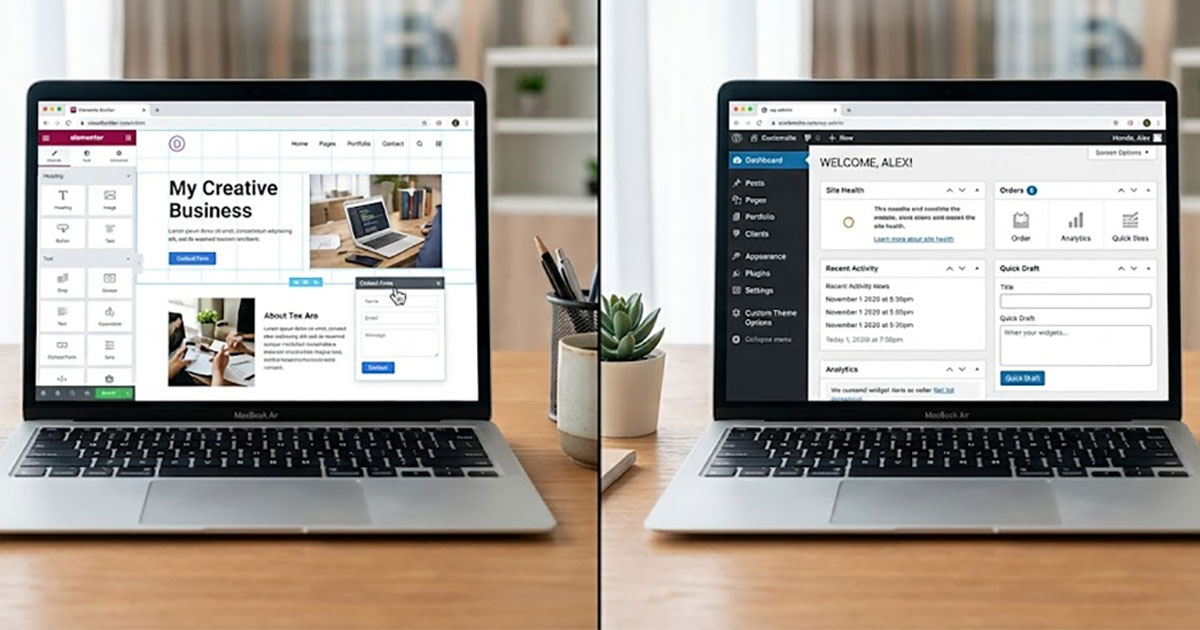
Hiring a Marketing Agency in Ocala? Ask These Questions First
When you’re a small business owner in Ocala, your website isn’t just a digital brochure, it’s often the first impression potential customers have of your business. Whether someone discovers you through a Google search for “best plumber in Marion County” or finds you on Facebook, that click to your website is a make-or-break moment.
Yet many Ocala business owners approach hiring a marketing agency or web designer the same way they might hire someone to paint their storefront: focusing primarily on aesthetics and price.
The reality is far more complex.
Your website affects your brand perception, your ability to generate leads, your visibility in local search results, and ultimately your conversion rate, the percentage of visitors who become paying customers.
The difference between a $2,000 website and a $10,000 website isn’t always obvious at first glance. Both might look professional. But one might generate three qualified leads per month while the other generates thirty. One might rank on page three of Google while the other dominates the first page for “Ocala [your service].”
This guide will help you ask the right questions before signing any contract. Whether you’re considering a freelance web developer, a local Ocala marketing agency, or a national firm, these questions will reveal whether they truly understand how to build websites that work for small businesses, not just websites that look pretty.
Why the Right Questions Matter More Than You Think
In Ocala your website has three critical jobs:
First, it must be found. If your ideal customers in Marion County can’t find you when they search for your services, your website might as well not exist. Local SEO, which helps your business show up in Google’s local pack and map listings, is foundational to small business success.
Second, it must build trust quickly. Ocala residents are savvy consumers who can spot a generic, template-driven website immediately. Your site needs to communicate professionalism, local expertise, and credibility within seconds of loading.
Third, it must convert visitors into customers. Every page should guide visitors toward a clear action: calling your business, filling out a contact form, booking an appointment, or making a purchase. Beautiful design means nothing if your phone doesn’t ring.
The questions below are organized by category to help you evaluate whether a marketing agency can deliver on all three fronts.
What This Guide Covers
Core Questions to Ask (organized by category):
- Strategy & Goals: What are your business goals for this site? How will my website generate leads or sales?
- Local SEO & Visibility: How will you optimize for Ocala searches? What’s your Google Business Profile strategy?
- Design & User Experience: How do you balance aesthetics with conversion goals?
- Content Strategy: Who writes the content? How do you approach SEO copywriting?
- Technical Foundation: What platform will you use? How fast will my site load?
- Conversion Optimization: How will you turn visitors into customers?
- Project Management: What’s the timeline? How do you communicate?
- Investment & Value: What’s included? How will I see ROI?
- Red Flags: Warning signs to watch for when evaluating agencies.
Practical, actionable guidance:
- Real examples of good vs. weak answers to help readers evaluate responses
- Specific technical terms explained in plain language
- Local context (Ocala, Marion County, Florida market considerations)
- Budget expectations and pricing models
Conclusion:
- Reinforces that this is an investment in business growth
- Encourages thorough vetting rather than quick decisions
- Reminds readers their future customers are searching now
The goal is to empower Ocala small business owners with the knowledge to make confident, informed decisions when hiring a marketing agency or web designer and to avoid costly mistakes that could hurt their online presence and bottom line.
Strategy & Goals: Does This Agency Think Like a Business Partner?
Before a single pixel is designed or line of code is written, your marketing agency should want to understand your business deeply. Red flags appear immediately when agencies jump straight to talking about color schemes or showing you their portfolio. Great marketing agencies think like business consultants first and creatives second.
1. What are my business goals for this site? How will my website generate leads or sales?
This is your opening question, and it reveals everything. A skilled marketing agency will turn this back on you: “Tell me about your business model. Who’s your ideal customer? What does a typical sale look like? Where do most of your customers come from now?”
They should be probing to understand whether you need phone calls, form submissions, online bookings, e-commerce transactions, or something else entirely. For example, if you run a plumbing business in Ocala, your website’s primary goal is likely emergency service calls and scheduled appointments. If you own a boutique on the Ocala Downtown Square, you might need a mix of foot traffic generation and online sales.
The agency should articulate how the website architecture, content, and calls-to-action will support your specific goals.
Weak answer: “We’ll make it look professional so people trust you.”
Strong answer: “We’ll prioritize your phone number in the header with click-to-call functionality, create service-specific landing pages for each of your key offerings optimized for local search, implement a booking system that integrates with your scheduling software, and add lead capture forms strategically placed on high-traffic pages. We’ll also set up conversion tracking so you know exactly how many leads the site generates.”
2. How do you approach the discovery phase? What information will you need from me?
Professional marketing agencies use a structured discovery process. They’ll want to understand your target market, competitors, unique value proposition (UVP), and current marketing efforts. They might request access to your Google Analytics (if you have an existing site), ask about your busiest seasons, or want to understand your customer journey from awareness to purchase.
In Ocala specifically, they should ask about geographic service areas. Do you serve all of Marion County? Do you draw customers from The Villages or Gainesville? Understanding your market geography affects everything from local SEO strategy to the imagery and language used on your site.
Be wary of agencies or web designers who don’t ask for much information upfront or who rely entirely on a basic questionnaire. Building an effective website requires conversation, not just forms. A thorough discovery process typically takes 1-2 weeks and includes competitive analysis, keyword research, and stakeholder interviews.
3. Can you share an example of how you’ve helped a similar business achieve their goals?
Case studies and past results tell you more than generic portfolios. You want specific examples: “We built a website for a Gainesville HVAC company that increased their qualified lead volume by 140% in six months through local SEO optimization and conversion-focused design” is far more meaningful than “Here are some pretty websites we’ve made.”
Ask follow-up questions: How did they measure success? What strategies did they employ? How long did results take? What was the client’s budget? Be skeptical of marketing agencies who can’t point to concrete business outcomes for past clients.
For Ocala small business owners, it’s particularly valuable if the agency has experience with Florida-based businesses or local service businesses in similar markets. They’ll understand the competitors, seasonal considerations (like summer AC failures or hurricane preparation), and local consumer behavior.
4. What makes your approach different from other agencies or web designers?
This question reveals their unique value proposition and helps you understand what you’re really paying for. Some agencies specialize in technical SEO and web development. Others excel at content marketing and brand storytelling. Some focus on e-commerce. Others are conversion rate optimization specialists.
The best answer will be specific and honest about their strengths. Be skeptical of agencies who claim to be the best at everything.
That’s usually code for being mediocre at most things.
Local SEO & Visibility: Will Ocala Customers Find You?
For most small businesses in Ocala, local search visibility is non-negotiable. When someone searches “restaurant near me” or “Ocala roofing company,” you need to appear. The marketing agency’s understanding of local SEO and web development best practices will directly impact how much new business your website generates.
1. How will you optimize my website for local search in Ocala and Marion County?”
A competent answer will cover multiple elements:
Google Business Profile optimization: Your website should be connected to and optimized alongside your Google Business Profile. The agency should ensure NAP consistency (Name, Address, Phone number) across your website and all online directories. They should also help you optimize your GBP with proper categories, high-quality photos, posts, and review management strategies.
Local keywords: Your website content should naturally incorporate location-based keywords that Ocala customers actually use. “Emergency plumber in Ocala, FL” or “Marion County tree removal service” should appear in strategic places, page titles, headings, meta descriptions, content, and alt text.
Schema markup: This technical SEO element helps Google understand your business type, location, hours, services, and reviews. It’s the difference between a plain search result and a rich result that shows star ratings, business hours, and other valuable information. Schema markup is invisible to visitors but incredibly valuable for search engines.
Location pages: If you serve multiple areas (Ocala, Silver Springs, Belleview, Dunnellon, The Villages), dedicated location pages can help you rank in each area’s local results. Each page should have unique content, not just the same text with the city name swapped out. Google penalizes that approach.
Local link building: Quality backlinks from other Ocala businesses, Chamber of Commerce listings, local news sites, and community organizations signal to Google that you’re a legitimate local business.
Red flags include vague answers like “We’ll do SEO” or “We’ll add keywords.” That’s not a strategy. Push for specifics from your web developer or marketing agency. Ask them to walk you through their local SEO checklist.
2. How do you handle mobile optimization, and why does it matter for local search?
Here’s a critical statistic: over 60% of local searches happen on mobile devices, and that percentage is even higher for certain industries like restaurants, emergency services, and retail. If your website doesn’t work flawlessly on smartphones, you’re losing customers before they even see what you offer.
But mobile optimization goes beyond responsive design (making sure your site adapts to different screen sizes). Your marketing agency or web developer should discuss:
Page speed on mobile connections: A site that loads quickly on your office computer but takes eight seconds to load on a smartphone at the Paddock Mall will frustrate potential customers. Google also uses mobile page speed as a ranking factor. Your agency should target load times under 3 seconds on mobile.
Touch-friendly interface: Buttons and links need to be large enough to tap accurately (at least 48×48 pixels is the recommended size). Forms should minimize typing with smart defaults and input types (like triggering the number pad for phone number fields). Navigation menus should be thumb-friendly.
Click-to-call prominence: On mobile, your phone number should be immediately tappable. Many Ocala service businesses generate most of their leads through phone calls, so this isn’t just a nice-to-have. The agency should also implement call tracking so you know which marketing channels drive phone calls.
Mobile-first indexing: Google now primarily uses the mobile version of your site for indexing and ranking. If your mobile experience is poor, your desktop rankings suffer too.
Ask to see mobile versions of their past work. Load them on your own phone and evaluate the experience. Is it genuinely easy to use, or did they just shrink the desktop version? Test the forms. Are they frustrating to fill out on a small screen?
3. What’s your process for Google Business Profile optimization and citation building?
Your Google Business Profile (formerly Google My Business) might be even more important than your website for local visibility. When someone searches “who has the best pizza in Ocala,” the map results they see are powered by Google Business Profiles, not websites.
A marketing agency that understands local SEO will either handle Google Business Profile optimization themselves or coordinate with you to ensure it’s done correctly. This includes:
- Selecting the right primary and secondary business categories
- Uploading high-quality photos (exterior, interior, products, team)
- Creating and optimizing your business description with local keywords
- Setting up Google Posts for updates, offers, and events
- Implementing a review generation and response strategy
- Ensuring your hours, services, and contact information are accurate
- Adding attributes specific to your industry
- Utilizing Q&A features proactively
Citation building, getting your business listed consistently on directories like Yelp, Yellow Pages, Better Business Bureau, Angie’s List, local Ocala directories, and industry-specific platforms, also matters for local SEO. Inconsistent information across these platforms (different phone numbers, misspelled business names, old addresses) can hurt your rankings.
Some web designers and agencies partner with local SEO specialists for this work. That’s fine, but make sure someone is handling it and that it’s part of the overall plan, not an expensive add-on you discover later.
4. How will you track and report on local search performance?
You need to know if the agency’s local SEO efforts are working. They should commit to providing regular reports (monthly at minimum) that show:
- Google Business Profile insights (views, calls, direction requests, website clicks)
- Local keyword rankings in Ocala and surrounding areas
- Organic traffic from local searches
- Lead generation metrics (calls, form submissions, bookings)
- Competitive positioning compared to other local businesses
The agency should use tools like Google Analytics 4, Google Search Console, and potentially specialized local SEO tools.
Design & User Experience: Will Visitors Trust You and Take Action?
Aesthetics matter, but not in the way many business owners think. Your website doesn’t need to be the most beautiful site on the internet. It needs to be professional, trustworthy, and aligned with your brand. Most importantly, it needs to guide visitors effortlessly toward becoming customers.
1. How do you balance aesthetics with functionality and conversion goals?
This question gets at the agency’s philosophy. The best answer acknowledges that design serves the business goal, not the designer’s ego. Every design choice, color palette, typography, layout, imagery, should have a strategic purpose.
For example, a personal injury attorney in Ocala needs a website that conveys authority, compassion, and results. Bold, confident design with professional photography, prominent case results, and trust badges supports those goals. A spa in downtown Ocala needs something entirely different, calming colors, spacious layout, beauty-focused imagery, and easy online booking.
Ask the marketing agency to explain their design choices for past projects. If they can’t articulate why they made specific decisions beyond “it looks good,” that’s concerning. Great agencies should talk about color psychology, visual hierarchy, white space strategy, and how design elements guide user behavior.
2. How will you make my website stand out from competitors while still meeting user expectations?
There’s a balance here. Users have expectations for how websites in your industry should work. If you run a restaurant, people expect to find your menu easily. If you’re a medical practice, they expect a prominent way to book appointments. If you’re a roofer, they expect to see photos of your work and a way to request estimates.
Breaking these conventions to be “unique” often backfires. But within those conventions, there’s room for your brand personality to shine through. Whether that’s through your photography, your copy voice, your color scheme, or micro-interactions (like subtle animations when you hover over buttons).
A good marketing agency researches your competitors’ websites (both in Ocala and nationally) to understand the baseline expectations, then finds ways to differentiate you strategically. They should show you this competitive analysis during the discovery phase.
3. Can you walk me through how a typical customer would navigate my site to achieve their goal?
This forces the agency to think through user experience. They should be able to describe the path from homepage to conversion with specificity:
“A homeowner in Ocala searches ‘roof repair near me,’ finds your site ranking #2 in local results, lands on your roofing services page which loads in under 2 seconds. Above the fold, they see your phone number prominently displayed with click-to-call, a headline addressing their pain point (‘Roof Leaking? We’re There Today’), and high-quality photos of your team working on local homes they recognize. As they scroll, they read about your 25 years serving Marion County, see your A+ BBB rating and 127 Google reviews with 4.9 stars, and view a gallery of completed projects with before/after photos. They click the ‘Get Free Estimate’ button, fill out a simple three-field form (name, phone, brief description), and receive an immediate confirmation with expected response time. They also get your phone number again in case they prefer to call. Within 30 minutes, they receive a text confirmation and scheduling options.”
If the agency can’t clearly articulate user flows like this, the resulting website will feel confusing and directionless. Ask them to map out the journey for your specific business.
4. What accessibility standards do you follow, and why does it matter?
Website accessibility means ensuring people with disabilities can use your site. This includes people with visual impairments using screen readers, people with motor disabilities using keyboard navigation, people with hearing impairments needing captions, and more.
Beyond being the right thing to do, accessibility has practical benefits. Many accessibility practices (like clear heading structure, descriptive link text, and proper contrast) also improve SEO and general usability. And in some cases, accessibility is legally required under the Americans with Disabilities Act, businesses have faced lawsuits for inaccessible websites.
The marketing agency or web developer should be familiar with WCAG (Web Content Accessibility Guidelines) standards, ideally meeting WCAG 2.1 Level AA compliance. They should discuss things like:
- Color contrast ratios (at least 4.5:1 for normal text)
- Keyboard navigation for all interactive elements
- Alt text for images that screen readers can interpret
- Semantic HTML structure (proper heading hierarchy)
- Captions for video content
- Form labels and error messages that are screen-reader friendly
Some agencies offer accessibility audits as part of their service or can recommend third-party accessibility testing. This is worth the investment to protect your business and serve all customers.
Content Strategy: What Will Your Website Actually Say?
Many small business owners don’t realize content strategy is separate from web design and just as important. You can have the most beautiful website in Ocala, but if your content is generic, unclear, or doesn’t speak to your target customer, it won’t drive results.
1. Who creates the content for my website, and what’s that process like?
There are typically three models:
You provide all content: The agency gives you templates or guidance, and you write everything. This is the most affordable option but requires significant time investment. Many business owners underestimate how challenging it is to write effective website copy. If you choose this route, expect the agency to provide detailed content briefs outlining what each page needs, target keywords, ideal word count, and tone guidelines.
The agency provides content: Some marketing agencies include professional copywriting as part of their package. This is usually the best option if you can afford it, as professional writers understand how to write for the web, incorporate keywords naturally, guide readers toward conversion, and maintain brand voice consistency. They’ll interview you to extract your expertise, then craft compelling content that resonates with your target audience.
Collaborative approach: You provide the expertise and key information through interviews or rough drafts, and the agency shapes it into effective website copy. This middle ground often works well for small businesses. You ensure technical accuracy and authentic voice; they ensure strategic structure and persuasive writing.
Make sure you understand who’s responsible for what. Also ask about ongoing content updates. Will you be able to edit content yourself through a content management system, or will you need to pay the agency for every text change? Having some ability to make minor edits yourself (fixing hours, updating prices, adding new team members) is usually preferable.
2. How do you approach writing copy that converts visitors into customers?
Effective website copy is clear, benefit-focused, and action-oriented. It addresses the visitor’s needs and concerns directly. It builds trust through specificity and proof. It uses the language your customers actually use, not industry jargon.
Compare these two approaches to a homepage headline:
Weak: “Welcome to Ocala’s Premier HVAC Company – Your Trusted Partner for All Your Heating and Cooling Needs”
Strong: “When Your AC Breaks in the Florida Heat, We’re There in 2 Hours or Less. Guaranteed”
The second headline is specific, benefit-focused, and addresses a real pain point that Ocala residents experience. It makes a concrete promise. The first headline is generic and could apply to any HVAC company anywhere.
The marketing agency or copywriter should understand these principles:
- Features vs. benefits: Don’t just list what you do; explain why it matters to the customer
- Specificity builds trust: “25 years serving Marion County” is more credible than “experienced”
- Address objections: If price is a common concern, address it upfront
- Use social proof: Weave in customer results, testimonials, and statistics
- Clear calls-to-action: Every page should guide visitors toward the next step
- Scannable formatting: Use headings, short paragraphs, bullet points, and bold text strategically
Ask to see examples of website copy they’ve written. Does it sound generic and interchangeable, or does it have personality and speak directly to the target audience?
3. How will you help me tell my brand story and differentiate from competitors?
Ocala has hundreds of HVAC companies, dozens of law firms, and countless restaurants. What makes yours different? Your website needs to articulate your unique value proposition clearly.
Maybe you’re a family-owned business with 30 years of Ocala history. Maybe you use proprietary technology or methods. Maybe your customer service is dramatically better. Maybe you specialize in a specific niche that competitors ignore. Maybe you have unique credentials or awards. Maybe you give back to the local community in meaningful ways.
The discovery process should uncover these differentiators, and the content should emphasize them throughout the site. Your “About” page shouldn’t be a boring corporate history, it should be a compelling story about why you do what you do and why it matters to customers.
The agency should help you identify what makes you genuinely different (not just what you wish made you different) and craft messaging that highlights these strengths authentically.
4. What SEO best practices do you follow for content?
SEO-friendly content isn’t about keyword stuffing or writing for robots. It’s about creating genuinely helpful content that answers the questions your potential customers are asking, structured in a way that search engines can understand and value.
The marketing agency should discuss:
Keyword research: Understanding what terms Ocala customers actually search for when looking for your services. They should use tools like Google Keyword Planner, Ahrefs, or SEMrush to identify search volume and competition for relevant keywords. They should target a mix of high-volume competitive terms (“Ocala HVAC”) and more specific long-tail keywords (“emergency AC repair Ocala weekend”).
Content structure: Using proper heading hierarchy (H1 for the main page title, H2 for major sections, H3 for subsections). Breaking up text into scannable chunks. Using bulleted lists where appropriate. Including relevant images with optimized alt text.
Internal linking: Connecting related pages on your site to help visitors find relevant information and help search engines understand your site structure. For example, your “Services” page should link to individual service pages, and blog posts should link to relevant service pages.
Meta data optimization: Writing compelling title tags and meta descriptions for each page that include target keywords and encourage clicks from search results.
Content freshness: Plans for ongoing content additions like blog posts, service updates, or news items that give search engines reasons to re-crawl your site. Regular content updates signal that your site is active and relevant.
E-E-A-T principles: Demonstrating Experience, Expertise, Authoritativeness, and Trustworthiness through credentials, author bios, citations, and quality content.
Technical Foundation: Is Your Site Built to Last and Perform?
The technology choices your marketing agency or web developer makes affect your website’s speed, security, searchability, and long-term maintainability. Most small business owners don’t need to become technical experts, but you should understand the basics of what you’re getting.
1. What platform or CMS will you build my site on, and why is it the right choice for my business?
Content Management Systems (CMS) like WordPress, Shopify, Squarespace, Wix, or custom solutions each have trade-offs. There’s no universally “best” platform, but there is a best platform for your specific needs.
WordPress powers over 40% of websites globally and offers maximum flexibility and customization. It’s excellent for businesses that want control, need custom functionality, or plan to scale. The plugin ecosystem is massive, allowing integration with almost any third-party tool. However, it requires more maintenance and security attention. WordPress is typically the best choice for content-heavy sites, blogs, or businesses that need specific custom features.
Shopify is purpose-built for e-commerce and is a good choice if selling products online is central to your business. It handles payments, inventory, shipping, and all e-commerce complexity out of the box. It’s more expensive than WordPress but requires less technical maintenance.
Squarespace and Wix are user-friendly platforms that work well for smaller, simpler websites. They’re easier to maintain but offer less customization. They’re good choices for service businesses with straightforward needs and business owners who want to make content updates themselves without any technical knowledge.
Custom solutions (built from scratch or using frameworks like React or Next.js) offer maximum control but come with significantly higher development costs and typically require developer support for any changes.
The agency or web developer should explain their recommendation based on your goals, technical comfort level, budget, and growth plans. Be skeptical of agencies who push one platform for everything, That suggests they’re limited by what they know rather than recommending what’s best for you. A good agency should have experience with multiple platforms and choose the right tool for each client.
2. How fast will my website load, and what are you doing to optimize performance?
Page speed affects everything: user experience, conversion rates, and SEO rankings. Google has made it clear that fast websites rank better. Studies show that 53% of mobile users abandon sites that take longer than 3 seconds to load.
Your marketing agency or web development team should discuss:
Image optimization: Compressing images without sacrificing quality, using modern formats like WebP that are 25-35% smaller than JPEG, implementing lazy loading so images only load as users scroll to them. Images are typically the biggest performance bottleneck on websites.
Code efficiency: Minimizing unnecessary code, combining and minifying CSS and JavaScript files where possible, removing unused code, and using browser caching strategically so repeat visitors load the site faster.
Hosting quality: The hosting service matters enormously. Cheap shared hosting might save $10/month but cost you thousands in lost business due to slow load times and downtime. Quality managed hosting (like WP Engine for WordPress or dedicated cloud hosting) provides better performance, security, and support. For most Ocala small businesses, hosting should cost $25-100/month.
Content Delivery Network (CDN): For businesses serving customers across Florida or beyond, a CDN ensures fast loading regardless of where visitors are located. A CDN stores copies of your site on servers around the world, so users load from the nearest server.
Ask if they use tools like Google PageSpeed Insights or GTmetrix to measure and optimize performance. Request that they show you speed test results for their previous projects. They should target:
- Largest Contentful Paint (LCP) under 2.5 seconds
- First Input Delay (FID) under 100 milliseconds
- Cumulative Layout Shift (CLS) under 0.1
These are Google’s Core Web Vitals, which directly impact rankings.
3. How will my website be secured against hacking and data breaches?
Website security isn’t just for Fortune 500 companies. Small business websites are frequent targets for hackers because they’re often poorly secured. A compromised website can damage your reputation, hurt your search rankings, expose customer data, and even lead to legal liability.
Security measures should include:
SSL certificate: The “https” and padlock in the browser bar that encrypts data transmission. This is required in 2025. Websites without SSL show scary “Not Secure” warnings in browsers and rank lower in search results. SSL certificates are typically free now through services like Let’s Encrypt.
Regular updates: CMS platforms, themes, and plugins need regular security updates. Who handles this? How often? What happens if you don’t maintain updates? WordPress alone releases updates multiple times per month. The agency should either include this in ongoing maintenance or provide you with clear instructions and reminders.
Secure hosting: Quality hosting providers include firewalls, malware scanning, DDoS protection, and intrusion detection. This is another reason not to choose the cheapest hosting option.
Strong authentication: Forcing strong passwords (minimum 12 characters with mixed case, numbers, and symbols) and potentially adding two-factor authentication for website administrators. Many hacks succeed simply because someone used “password123.”
Regular backups: Automated daily or weekly backups ensure that if something does go wrong, your site can be restored quickly. Backups should be stored off-site, not just on the same server as your website.
Security monitoring: Tools that actively scan for malware, vulnerabilities, and suspicious activity. Services like Sucuri or Wordfence for WordPress provide this monitoring.
PCI compliance: If you process credit card payments directly on your site (not through a third-party like Stripe or PayPal), you need to meet Payment Card Industry (PCI) security standards. This is complex and expensive; most small businesses should use payment processors that handle PCI compliance for them.
4. What happens if something breaks or I need technical support after launch?
The cheapest quote often doesn’t include post-launch support. Understand what’s included:
Warranty period: Many agencies offer 30-60 days of bug fixes after launch. This covers issues that existed at launch but weren’t caught during testing, not new features or changes you request.
Ongoing maintenance: Who handles CMS updates, security monitoring, backups, uptime monitoring, and performance optimization? What does this cost? Typical monthly maintenance retainers range from $50-300 depending on platform and services included.
Support availability: If your website goes down on a Saturday afternoon, can you reach someone? What’s the expected response time? Some agencies offer 24/7 emergency support; others provide business-hours-only support. Make sure the support level matches your business needs.
Support channels: Can you call, email, text, or submit tickets? How quickly do they typically respond? Do they charge hourly for support requests, or is it included in a monthly retainer?
Training: Will they teach you how to make basic updates yourself? Most agencies provide at least one training session showing you how to edit content, add blog posts, or update images. Ask if they provide video tutorials or documentation you can reference later.
Hosting management: Who controls your hosting account? You should have direct access even if the agency manages it day-to-day. Never let an agency put your site on their hosting account without giving you full ownership. This creates dependency and risk.
For Ocala businesses, consider whether you want a local marketing agency you can meet face-to-face for support or if remote support is sufficient. Both can work, but understand the support model before signing. Local support might cost more but can be valuable for business owners who prefer in-person relationships.
Conversion Optimization: Will Your Website Turn Visitors Into Customers?
A beautiful, fast, findable website is worthless if visitors don’t take action. Conversion rate optimization is the art and science of guiding visitors toward becoming customers. Whether that means calling, filling out a form, making a purchase, or booking an appointment.
1. How do you design websites to convert visitors into leads or sales?
Strong conversion-focused design incorporates multiple elements:
Clear calls-to-action (CTAs): Every page should have an obvious next step. “Call Now,” “Schedule Free Consultation,” “Get Instant Quote,” “Book Appointment.” These buttons should be visually prominent (contrasting color, good size, strategic placement) and action-oriented (not just “Learn More”). The agency should use psychology principles like urgency and specificity in CTA text.
Friction reduction: Make it as easy as possible to convert. Forms should request only essential information. Every additional field decreases conversion rates by an average of 11%. Phone numbers should be clickable on mobile. Booking systems should be simple and fast. Remove unnecessary steps between the visitor and their goal.
Trust signals: Reviews, testimonials, certifications, awards, case studies, guarantees, security badges, and customer logos all build credibility. For Ocala businesses, local reviews and specific references to serving Marion County residents for X years can be particularly powerful. Display your Google rating prominently with star graphics.
Value proposition clarity: Within 5 seconds of landing on your homepage, visitors should understand what you do, who you serve, and why you’re different. If they have to work to figure this out, they’ll leave.
Urgency and scarcity: Where honest and appropriate, elements like “Limited Availability,” “Seasonal Promotion Ends Friday,” or “Only 3 Spots Left This Week” can encourage action. These tactics work but should be used truthfully. False urgency damages trust.
Visual hierarchy: Guide the eye toward the most important elements through size, color, contrast, and placement. The human eye naturally follows an F-pattern or Z-pattern when scanning web pages. Design should work with these patterns, not against them.
Mobile conversion optimization: Remember that over half your visitors are on phones. Are forms easy to complete on mobile? Is the click-to-call button prominent above the fold? Can users easily navigate with one thumb? Test your site on actual phones, not just desktop browser resizing.
Exit-intent strategies: Some agencies implement exit-intent popups that offer discounts or capture emails when visitors are about to leave. These can work but should be used strategically to avoid annoying users.
2. How will you incorporate social proof and customer testimonials?”
People trust other people more than they trust businesses. Your website should showcase satisfied customers prominently, especially customers from Ocala or Marion County that prospects might relate to.
The marketing agency should plan for:
Written testimonials: Direct quotes from happy customers, ideally with full names, potentially photos, and specific results. “ABC Roofing replaced our roof in two days with zero mess” is more compelling than “Great service!” Include the customer’s city if possible: “- Sarah M., Ocala, FL”
Video testimonials: Even short 30-60 second video testimonials are incredibly persuasive. Seeing and hearing a real customer builds trust in a way text never can. The agency might offer to film these for you or provide guidance on how to collect them yourself using smartphones.
Review integrations: Displaying your Google reviews, Yelp reviews, Facebook reviews, or industry-specific reviews (like Avvo for lawyers or Healthgrades for doctors) directly on your site using review widgets that automatically update. This ensures your social proof stays current without manual updates.
Case studies: For B2B businesses or high-consideration purchases (like legal services, major home improvements, or expensive services), detailed case studies showing how you solved specific problems build credibility. Format: “Challenge → Solution → Results” with specific metrics when possible.
Ratings and badges: Display your overall rating prominently (“4.9 stars from 127 reviews”). Include trust badges like BBB accreditation, industry certifications, “Best of Ocala” awards, or association memberships.
Client logos: If you serve business clients, displaying logos of companies you’ve worked with builds credibility through association.
Numbers and statistics: “Serving Marion County for 25 years,” “Over 5,000 satisfied customers,” “98% customer satisfaction rate.” Specificity breeds trust.
Ask how they plan to collect and display these elements. Will they help you gather testimonials? How will review feeds stay updated? Do they have video production capabilities or partnerships? Make sure there’s a clear plan, not just placeholder text that says “Testimonials go here.”
3. What analytics and tracking will be implemented, and how will we measure success?
You can’t improve what you don’t measure. Your website should have comprehensive analytics from day one so you know what’s working and what isn’t.
At minimum, this includes:
Google Analytics 4: Understanding how much traffic you get, where it comes from (organic search, social media, direct, referrals), what pages visitors view, how long they stay, and how they navigate your site. GA4 is more complex than older versions but provides much better insights into user behavior.
Goal tracking: Measuring specific conversions like form submissions, phone button clicks, purchases, booking completions, email clicks, or file downloads. Each goal should be set up with proper tracking so you know exactly how many conversions your site generates.
Call tracking: If phone calls are important to your business (they are for most Ocala service businesses), use call tracking numbers that attribute calls to specific marketing sources. Services like CallRail integrate with your website to show which pages and campaigns drive calls.
Form analytics: Understanding which forms convert best, where users abandon forms, which fields cause problems. Tools like Google Analytics can track this, or dedicated form analytics tools provide deeper insights.
Heatmaps and session recordings: Tools like Hotjar and Microsoft Clarity (free) show how visitors actually interact with your site, where they click, how far they scroll, where they get confused or stuck. Watching session recordings of real users is incredibly revealing.
Search Console: Google’s free tool that shows what search terms bring people to your site, how you’re ranking for different keywords, which pages get the most impressions and clicks from search, and technical issues Google has detected.
Conversion rate by traffic source: Not all traffic is equal. You need to know whether visitors from Google convert better than visitors from Facebook, or whether organic search outperforms paid ads.
The marketing agency should set these up properly (many businesses have broken or misconfigured analytics), provide training on how to use them, and either offer to review analytics with you regularly (monthly or quarterly) or provide automated reporting dashboards. They should also commit to making data-driven optimization recommendations based on what the analytics reveal.
4. How do you approach ongoing testing and optimization after launch?
Your website should never be “finished.” The best marketing agencies view launch as the beginning of an optimization process, not the end of a project.
Ask about their approach to:
A/B testing: Testing different headlines, calls-to-action, button colors, layouts, or images to see what converts better. For example, does “Get Free Quote” convert better than “Request Estimate”? Does your homepage convert better with a photo of your team or your work? You won’t know without testing.
Continuous improvement: Using analytics data to identify weak points and make improvements. If your services page has high traffic but low conversions, why? If users consistently bounce from your pricing page, what’s the issue? The agency should proactively identify opportunities for improvement.
Quarterly reviews: Regular check-ins to review performance against goals, discuss what’s working and what isn’t, and implement new strategies. These reviews should include competitive analysis (how are your rankings compared to competitors?), traffic trends, conversion trends, and ROI analysis.
Content expansion: Based on keyword research and analytics data, identifying opportunities for new pages or blog content that could capture additional search traffic and leads.
Some agencies offer ongoing optimization services as monthly retainers. Others launch and hand off completely. Understand what you’re getting. If the agency doesn’t offer ongoing optimization, they should at least provide you with a roadmap of potential improvements you can implement yourself or hire someone else to handle.
The most successful websites evolve based on data, not opinions. Make sure your agency takes this approach.
Project Management: What’s the Process and Timeline?
How the project unfolds matters almost as much as the final product. Misaligned expectations around timeline, communication, and process cause most client-agency conflicts.
1. What’s your typical timeline from kickoff to launch, and what factors might affect it?
Most small business websites take 6-12 weeks from project start to launch, depending on complexity. E-commerce sites, sites with custom functionality, or sites requiring extensive content creation may take 12-16 weeks or longer.
The timeline should break down into clear phases:
- Discovery and strategy: 1-2 weeks (competitive analysis, keyword research, stakeholder interviews, sitemap creation)
- Design mockups: 1-3 weeks (wireframes, then visual designs for key pages, revision rounds)
- Development: 2-4 weeks (building out the site, integrating functionality, CMS setup)
- Content creation: 1-4 weeks (often overlapping with design/development if the agency is writing content)
- Testing and revisions: 1-2 weeks (cross-browser testing, mobile testing, load testing, bug fixes)
- Launch preparation: 1 week (SEO setup, analytics configuration, final client review, staging to production migration)
Understand what depends on you. If the agency needs you to provide photos, approve designs, review content, or provide access to accounts, your responsiveness directly affects the timeline. Many projects get delayed because the business owner gets busy and doesn’t provide feedback promptly. If you can’t commit to reviewing and providing feedback within 2-3 business days, communicate that upfront so the agency can adjust the timeline.
Ask what happens if the timeline slips. Are there penalties for delays on their end? What if delays are on your end? How do they handle scope changes that affect timeline? A good agency builds in some buffer time and communicates proactively if delays occur.
2. What’s your communication style and frequency during the project?
Some agencies provide daily updates through project management tools. Others schedule weekly check-in calls. Neither is inherently better, but mismatched expectations cause frustration.
Ask about:
Communication channels: Email, phone, Slack, text, project management tools like Asana, Trello, or Monday? What’s the primary channel, and what’s appropriate for urgent issues versus routine questions?
Update frequency: How often will you hear from them? Weekly status emails? Bi-weekly calls? Only when they need something from you? More communication is generally better than less, especially for business owners new to web development projects.
Response time: If you email a question on a Tuesday afternoon, how quickly can you expect a response? Same day? Next business day? This should be defined in your contract. Emergency response times should be faster than routine questions.
Meeting cadence: Will you have regular video calls or phone check-ins? At what project phases? Many agencies schedule kickoff meetings, design review meetings, pre-launch review meetings, and post-launch training.
Project visibility: Can you see project progress in real-time through a project management tool, or do you only see updates when the agency shares them? Many business owners prefer transparent visibility.
For Ocala business owners working with local marketing agencies, you might have the option of in-person meetings. Decide if that’s important to you or if remote collaboration via Zoom works fine. In-person meetings can be valuable for the initial discovery phase and final training but probably aren’t necessary throughout the entire project.
3. What do you need from me, and when?
Be clear about your responsibilities so you don’t become the bottleneck. Common requirements include:
Brand assets: Logo files (in vector format like .ai, .eps, or .svg if possible), brand colors (specific hex codes or Pantone colors), fonts, existing marketing materials, brand guidelines if they exist.
Content: Information about your services, product descriptions, team bios, company history, photos (exterior, interior, team, work examples, products), customer testimonials, case studies, frequently asked questions.
Access: Logins for your domain registrar (where you bought your domain name), current hosting account if you have one, current website if being redesigned, Google Business Profile, Google Analytics, Search Console, social media accounts for integration, any third-party tools that need integration (booking systems, CRM, email marketing, etc.).
Decision-making: Timely review and approval of design mockups, content drafts, and functionality. Identify upfront who has final approval authority to avoid delays waiting for consensus among multiple stakeholders.
Payment: Understanding the payment schedule (typically deposit at contract signing, milestone payments at design approval and development completion, final payment at launch, then monthly for ongoing services).
The more prepared you are with these items, the smoother and faster the project will progress. Ask the agency to provide a detailed checklist of what they need and when. Many agencies create shared folders (Google Drive or Dropbox) where you can upload materials as you gather them.
4. What’s your revision policy?
Unlimited revisions sound great until you realize they’re impractical and often lead to scope creep and extended timelines. Most agencies include 2-3 rounds of revisions at specific project phases (like after initial design mockups and after the first development build).
Understand what counts as a revision versus a change in scope:
Revision: Tweaking colors in an existing design, adjusting spacing, fixing typos, modifying text within an existing section, changing a photo. These are refinements to the agreed-upon direction.
Scope change: Deciding you want to add an entirely new page, requesting a completely different design direction after approving mockups, adding functionality that wasn’t in the original proposal (like a booking system or membership area), or requesting major content rewrites. Scope changes typically incur additional costs and extend the timeline.
Also clarify the revision process:
- Is there a deadline for providing feedback? (Yes, there should be. Typically 5-7 business days)
- What format should feedback take? (Detailed written notes are usually more effective than vague comments like “make it pop” or “I’ll know it when I see it”)
- How long do revisions take to implement? (Usually 3-5 business days depending on complexity)
- What happens after the included revision rounds are exhausted? (Additional revisions may be billed hourly)
Good agencies strike a balance between being responsive to your needs and maintaining project scope and timeline. The best way to minimize revisions is to provide detailed, thoughtful feedback the first time rather than piecemeal reactions.
Investment & Value: Understanding the True Cost
Price matters, but value matters more. The cheapest website is expensive if it doesn’t generate business. An investment that pays for itself through new customers is a bargain at almost any price.
1. What’s included in your quote, and what costs extra?
Website projects can have hidden costs if you’re not careful. Get absolute clarity on what’s included:
Design and development: Obviously included, but how many pages? What functionality? Are there page limits? Is the website responsive (works on all devices)? Does it include any custom features like contact forms, booking systems, e-commerce, or integrations?
Content creation: Is copywriting included or extra? How many pages of content? What about photography? Do they provide it, help you source stock photos, or expect you to provide all images?
Stock photos: If using stock imagery, are licensing fees included in the quote? Quality stock photos can cost $10-50 each, which adds up quickly.
Revisions: How many rounds are included at each phase?
Launch support: Is post-launch bug fixing included? For how long?
Training: Will they teach you how to update your site? Is training included or an additional cost? How many training sessions?
SEO setup: Is basic on-page SEO included (meta titles, descriptions, header tags, image alt text, schema markup, XML sitemap, robots.txt), or is that extra?
Common costs that are almost always separate:
Domain name registration: Usually $10-50/year depending on the domain extension (.com, .net, etc.).
Hosting: $10-100+/month depending on platform and needs. Cheaper isn’t better here. Quality hosting matters for speed, security, and uptime.
SSL certificate: Often free now through Let’s Encrypt, but confirm it’s included.
Premium plugins or tools: Some functionality requires paid subscriptions. For example, advanced form builders, SEO tools, security plugins, or booking systems may have monthly/annual costs.
Ongoing maintenance: Updates, security monitoring, backups, and support after the warranty period. Typically $50-300/month.
Email hosting: Professional email addresses (you@yourbusiness.com) typically aren’t included. Google Workspace or Microsoft 365 cost about $6-12/user/month.
Content updates: After launch, will you be able to make text and image updates yourself, or will you need to pay for every update? If the latter, what are the hourly rates?
Marketing services: The website itself rarely includes ongoing marketing (Google Ads, social media, email marketing, etc.). These are typically separate services with their own costs.
For Ocala small businesses, expect to invest:
- Template-based site (Squarespace, Wix): $1,500-5,000 for design/setup + $20-50/month for platform fees
- Custom WordPress site: $5,000-15,000 for design/development + $50-150/month for hosting/maintenance
- E-commerce site: $8,000-25,000+ for design/development + $100-300/month for hosting/maintenance/transaction fees
- Enterprise/complex site: $20,000-50,000+ for design/development + $300-1,000+/month for hosting/maintenance
Higher prices don’t automatically mean better results, but extremely low prices often mean corner-cutting that costs you more in the long run (poor SEO, slow loading, security vulnerabilities, no support).
2. What’s your payment structure?
Understanding the payment model helps you budget and also signals how the agency operates. Common payment models:
50% deposit, 50% at launch: Standard for smaller project-based work ($5,000-15,000 range). Simple but offers little protection if you’re unhappy mid-project.
Milestone payments: More common for larger projects. Typical structure: 30% deposit at contract signing, 30% at design approval, 30% at development completion, 10% at launch. This aligns payment with deliverables and provides mutual protection.
Monthly payments: Some agencies offer payment plans that spread the cost over 6-12 months. This improves cash flow for small businesses but usually includes interest or fees. Make sure you understand the total cost.
Retainer model: Some agencies charge lower upfront costs but require ongoing monthly retainers for hosting, maintenance, and ongoing optimization. Make sure you understand what happens to your website if you stop paying the retainer. Do you own it outright, or do they retain control?
Understand when payment is required and what happens if you’re unhappy at various stages. Are partial refunds possible if you terminate the project early? What if the agency misses deadlines or doesn’t deliver what was promised? These scenarios should be addressed in your contract.
Also understand what payment methods they accept. Bank transfer, check, credit card (which may include processing fees), or payment platforms?
3. How will this website generate ROI for my business?
Circle back to business goals. A $10,000 website that generates five new customers per month is highly profitable if your average customer value is $2,000 or more. A $2,000 website that generates zero customers is a complete waste of money.
Ask the marketing agency to help you think through the economics:
- If the goal is lead generation, how many leads per month would make this investment worthwhile?
- What conversion rate from visitor to lead is realistic for your industry? (Typically 2-5% for service businesses)
- How much traffic do you need to generate those leads?
- What’s your close rate from lead to customer?
- What’s your average customer lifetime value?
For example: If you need 10 new customers per month to justify the investment, and you close 20% of leads, you need 50 leads per month. At a 3% conversion rate, you need about 1,700 website visitors per month. Is that realistic for your market? The agency should help you think this through.
For Ocala businesses in competitive industries (legal, medical, home services, real estate), investing in a website that ranks well locally and converts effectively often generates positive ROI within 3-6 months. For less competitive or lower-volume industries, payback might take 12-18 months.
The agency should also discuss realistic timelines. SEO typically takes 3-6 months to show meaningful results. Paid advertising can drive traffic immediately but requires ongoing ad spend. Set expectations appropriately.
4. Can you provide references from past clients I can contact?
Past clients can speak honestly about communication, timeliness, problem-solving, results, and whether they’d hire the agency again.
Ask for 2-3 references, ideally businesses similar to yours in size, industry, or goals. The agency will naturally provide their happiest clients, but you can still learn a lot by asking:
- Did the project finish on time and on budget? If not, why?
- How was communication throughout the project?
- Did the website achieve the goals you set for it?
- How was the support after launch?
- What would you change about the process if you could do it over?
- Would you hire them again or recommend them to others?
- What were the biggest challenges during the project?
- How did the agency handle problems or disagreements?
Florida or Ocala-specific references are particularly valuable since those clients understand the local market context, similar competitive dynamics, and what it’s like to work with the agency in your area.
Also ask if you can see examples of websites they launched 2-3 years ago, not just recent work. This shows whether they build sites that last or sites that quickly become outdated. Check if those older sites are still fast, secure, and maintained.
Red Flags: Warning Signs to Watch For
As you interview marketing agencies and web designers, certain warning signs should make you pause or walk away entirely:
Guaranteeing first-page Google rankings: No legitimate professional can guarantee specific rankings. SEO is influenced by hundreds of factors, many outside anyone’s control. Google’s algorithm changes constantly. Agencies that guarantee rankings are either lying or planning to use black-hat tactics that could get your site penalized.
Refusing to show past work or provide references: If they can’t or won’t demonstrate success, assume there isn’t any to demonstrate. Legitimate agencies are proud to share their portfolio and connect you with happy clients.
High-pressure sales tactics: Pushing you toward decisions before you’re ready, pressuring you to sign immediately with “limited time offers,” or making you feel bad for asking questions suggests they need your money more than they care about your success.
No contract or vague contract terms: Professional relationships need clear written agreements covering scope, deliverables, timeline, payment, intellectual property ownership, and what happens if things go wrong. Be extremely wary of agencies that operate on handshakes or one-page agreements that leave everything ambiguous.
Ownership concerns: Clarify upfront and in writing that you own your website, domain name, content, and all assets. Some disreputable agencies retain ownership and essentially hold sites hostage if you stop paying monthly fees. Your contract should explicitly state that you own everything created for you.
Unwillingness to explain their process: If they can’t or won’t explain how they work in terms you understand, that’s concerning. Either they don’t have a real process, or they’re hiding something. Good agencies welcome questions and explain their approach clearly.
Cookie-cutter approach: Every business is unique. Agencies who don’t invest time in understanding your specific situation, competitive landscape, and goals will deliver generic results that look like every other site they build.
Price that seems too good to be true: A quality custom website requires 40-100+ hours of skilled work (strategy, design, development, content, testing). Prices far below market rate mean someone is cutting corners using cheap templates, skipping important steps like SEO setup, or planning to nickel-and-dime you with hidden costs later.
No ongoing support option: Websites need maintenance, updates, and support. Agencies who disappear after launch leave you vulnerable to security issues, broken functionality, and no recourse when problems arise.
Promising immediate results: Building a website takes time. SEO takes time. Anyone promising “instant” results or “overnight” success is being dishonest about how digital marketing actually works.
Bad-mouthing competitors excessively: While honest comparison is fine, agencies that spend most of the sales conversation trash-talking other agencies are often deflecting from their own weaknesses.
No clear point of contact: Will you work with the person you’re meeting with, or will you be handed off to junior staff? Make sure you know who’s actually doing the work and who you’ll communicate with throughout the project.
Making Your Decision: What Matters Most
After interviewing multiple marketing agencies and web designers, you’ll need to make a decision. Resist the temptation to choose based solely on price or on whose portfolio you like best aesthetically.
Instead, evaluate candidates holistically:
Understanding of your business: Do they grasp your goals, market, and customers? Did they ask insightful questions? Did they identify challenges or opportunities you hadn’t considered?
Strategic thinking: Are they bringing ideas and insights beyond just design? Do they understand the connection between website, SEO, content, and business results?
Technical competence: Do they demonstrate real expertise in modern web development, SEO, and performance optimization? Can they explain technical concepts clearly? Do their past sites load fast and rank well?
Communication style: Do you feel comfortable working with them? Do they explain things clearly without condescension? Are they responsive to emails and calls? Will they be patient with your questions?
Process and professionalism: Is their approach organized and transparent? Do they use project management tools? Is their proposal detailed and clear? Do they have a well-defined process?
Results focus: Are they oriented toward business outcomes (leads, sales, rankings) or just deliverables (pages, features)? Do they talk about ROI and measurement?
Cultural fit: For Ocala businesses, do they understand Florida small business culture and the local market? Do they have experience with businesses like yours? Do your personalities mesh reasonably well?
Portfolio quality: Look beyond aesthetics. Are their sites fast? Do they rank well in Google? Do they have clear conversion paths? Are they still maintained or have they become outdated?
Contract terms: Are the terms fair and clearly written? Do you feel the contract protects both parties appropriately?
Trust your instincts, but verify them against objective criteria. The right marketing agency becomes a genuine partner in your business growth, not just a vendor who builds something and disappears.
Sometimes the right choice isn’t the cheapest or the most expensive, it’s the agency that best understands your needs, communicates well with you, and has proven they can deliver results for businesses like yours.
Moving Forward: After You Choose an Agency
Once you’ve selected your marketing agency or web designer, set the relationship up for success:
Be responsive and engaged: Provide feedback, content, and materials promptly. Block time on your calendar for design reviews and content review. Project delays often stem from client-side bottlenecks. Don’t let that be you.
Speak up early if something concerns you: If something worries you during the project, raise it immediately with specific examples. Small concerns become big problems if left unaddressed. “I’m concerned the homepage doesn’t clearly explain what we do” is better than silently hoping it will improve.
Trust but verify: Trust their expertise. You hired them for a reason. But verify that promises are being kept and goals are being met. Review analytics, ask questions about strategies, and hold them accountable to the timeline and deliverables in your contract.
Think long-term: Your website is never truly finished. Plan for ongoing optimization, content updates, and evolution as your business grows. Budget for monthly maintenance and periodic refreshes.
Provide honest feedback: During reviews, give detailed, thoughtful feedback rather than vague reactions. “The call-to-action button needs to be more prominent, maybe larger and a contrasting color” is more useful than “It doesn’t pop.”
Measure results: Once launched, actually look at your analytics. Are you getting more calls? More form submissions? Better search rankings? More revenue? Use data to justify continued investment in your website and inform optimization decisions.
Maintain the relationship: Even after the site launches, stay in touch with the agency. Market conditions change, competitors evolve, Google algorithm updates happen. Agencies that built your site are valuable partners for ongoing strategy.
Leave a review: If the agency does great work, leave them a positive review on Google or other platforms. This helps other Ocala business owners find quality partners and rewards agencies that deliver results.
Conclusion: Your Website Is an Investment in Growth
For small businesses in Ocala and throughout Marion County, your website is often your hardest-working employee. It’s open 24/7, always ready to answer questions, showcase your expertise, and convert visitors into customers. It works nights, weekends, and holidays without complaint.
The difference between an adequate website and an exceptional one isn’t necessarily obvious when you first see them. But over months and years, that difference compounds into thousands of dollars in additional revenue or thousands of dollars in missed opportunities.
By asking the right questions before hiring a marketing agency or web designer, you dramatically increase your chances of investing in a website that truly works for your business. The questions in this guide give you a framework for evaluating agencies based on what actually matters: their ability to understand your business, implement proven strategies, and deliver measurable results.
Take your time, do your research, and remember that the goal isn’t to find the cheapest option or the prettiest portfolio. The goal is to find the right partner who will help your Ocala business succeed online; someone who thinks strategically, communicates clearly, delivers quality work, and stands behind their results.
Your future customers are searching right now. Make sure they find you and make sure what they find convinces them to choose your business over every competitor in Marion County.
The website you build today will either generate leads and revenue for years to come, or it will sit dormant as a wasted investment. The difference comes down to asking the right questions before you start, choosing the right partner, and committing to ongoing optimization after launch.
Your brand deserves to be awesome and that starts with a website that works as hard as you do. These questions will help you find the marketing agency that can deliver it.
Ready to vet your next agency? Talk to the Graphicten team, we’re happy to answer these questions and more.
If you are specifically focused on improving your local search rankings, review our complete checklist on choosing a local SEO partner in Marion County.